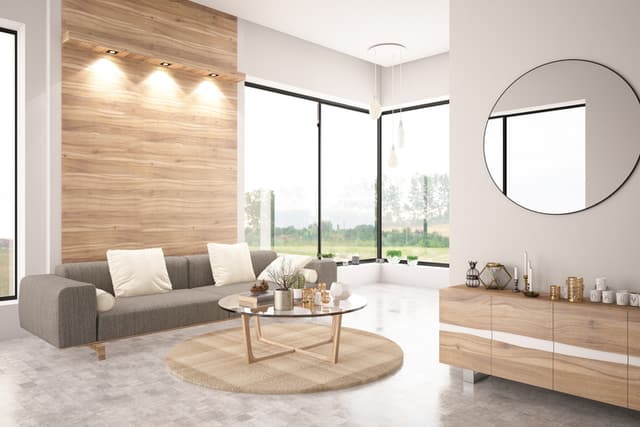
The walkway between the sofa and the kitchen doorway is about twenty-six inches wide, and the corner of the rectangular cocktail table has claimed a piece of nearly everyone’s hip at some point. A two-year-old learning to cruise the furniture found the same corner with her forehead last winter, which started the conversation in earnest. The table itself is perfectly good, and that is what makes the decision annoying, because the problem is not quality or finish. It is geometry, and a round coffee table is the shape that solves it, since a circle has no corner to walk into and no dead point that everyone in the room has to reach around.
The encouraging part is that this is a well-understood decision with clear rules, not a matter of taste alone. At Store for Homes Furniture, our team walks central Iowa shoppers through diameter, height, and clearance against their actual sofa, then matches materials to how hard the room really works. This guide covers why round shapes perform the way they do, the size guide that matters most, materials and finishes, base designs and style directions, a side-by-side comparison, honest trade-offs, styling that stays functional, what to inspect before buying, and the picks worth shopping in our showroom.
Find the Round Coffee Table Your Living Room Has Been Missing
Store for Homes Furniture has helped Newton and central Iowa families choose living room furniture that fits real rooms and real doorways for years. Compare finishes and construction in our showroom, then let our own crew handle delivery, setup, and service after the sale.
Explore round coffee table optionsKey Takeaways
- Round wins on flow and safety: Removing corners widens tight walkways, eliminates the edge that catches shins, and lets everyone seated reach the surface equally.
- Size to the sofa, then the room: Aim for a diameter roughly one half to two thirds of your sofa length, with the top level with or just below the seat cushion.
- The base matters as much as the top: A pedestal or drum clears legroom differently than four corner legs, and it changes how heavy the table looks in a small room.
- Material decides daily life: Stone-look ceramic and sealed wood forgive a busy household, while natural marble etches and glass needs constant cleaning.
Why Choose a Round Coffee Table? Flow, Safety, and Space

A round coffee table changes three things about a living room at once, and none of them are cosmetic.
The first is traffic. A circle sheds its corners, which is where the physical conflict in a tight room always happens. Trim the corners off a 48-inch square and you gain real inches in the diagonal walkway without losing much usable top. In a room where the path from the sofa to the kitchen runs past the table, that difference is felt every single day.
The second is reach. On a long rectangle, whoever sits at the middle of the sofa owns the table, and the people at either end reach past someone else for a drink. Around a circle, everyone seated is roughly the same distance from the surface, which is why round tables suit conversational groupings with facing sofas or a sofa and two chairs.
The third is line. Most living rooms are already a collection of rectangles: the room itself, the sofa, the rug, the media console, the windows, sometimes paneled walls. A circle interrupts that grid and softens the whole space, which is a visual effect that costs nothing extra.
The Layouts Where Round Performs Best
- Small living rooms and apartments where every inch of walkway counts
- L-shaped sectionals, where a long rectangle blocks the corner seat and leaves the short run underserved
- Conversational groups with facing sofas or a sofa flanked by two chairs
- Homes with toddlers or older adults, where corner injuries and trip risk are real considerations
- Narrow rooms where a rectangular table leaves less than 30 inches of passage on one side
When Round Is the Wrong Call
Honesty serves you better than enthusiasm here. A round coffee table is a poor fit alongside a very long sofa with no flanking seating, because a circle sized to that sofa gets uncomfortably large while still leaving both sofa ends short of surface. It is also the wrong shape when serving area matters most, since a rectangle of the same footprint gives you meaningfully more usable top for platters, board games, or a laptop and papers spread out. If your living room regularly hosts a buffet-style spread, take the corners.
Read More: Why Curved Furniture Feels Softer and More Relaxed
Round Coffee Table Size Guide: Diameter, Height, and Clearance
Here is the rule to start with: aim for a diameter of roughly one half to two thirds of your sofa length, then adjust for the room. An 84-inch sofa points to a 42 to 56 inch circle, and most rooms land near the lower half of that band once walkways are accounted for.
Diameter by Seating Type
- Loveseat or small space: 28 to 34 inches keeps the table proportional and the walkway usable.
- Standard sofa around 84 inches: 36 to 44 inches is the sweet spot for most central Iowa living rooms.
- Extra-long sofa of 96 inches or more: 44 to 50 inches, paired with a flanking chair or a side table to cover the ends.
- Sectional: Two smaller round tables or a nesting pair almost always beats one oversized circle, because the pair can shift for traffic and serve both runs of the L.
Height and Clearance
Match the table top to the sofa seat height, or sit it up to two inches below. Above seat height, the table crowds the sitting position and looks bulky. Well below it, everyone leans down all evening.
- Leave 14 to 18 inches between the sofa front and the table edge, which is close enough to reach a glass without standing up.
- Keep 30 inches or more of walkway on main traffic paths, and 24 inches on secondary ones.
- Allow 24 to 36 inches between the table and a television console so nobody sidesteps to reach a plug.
- Measure the deepest seat cushion rather than the sofa frame, since the frame dimension does not reflect where anyone actually sits.
Base Style Changes Usable Space
Two tables of the same diameter can feel very different underfoot. A pedestal or drum base leaves the perimeter clear, so feet, a footstool, and a robot vacuum all move freely and chairs can pull closer. Four corner legs put a post exactly where a shin wants to go and visually fence off the floor beneath. In a tight room, base style deserves as much attention as diameter.
Before ordering, cut a paper circle at your chosen diameter or tape the outline on the floor and live with it for a couple of days. Two adjustments worth making: on a high-pile rug, the table sits noticeably higher than the spec sheet suggests, so aim slightly lower on height, and with a reclining sofa, measure clearance with the footrest fully extended rather than closed, because that extension eats six to twelve inches of the gap you just measured.
Read More: Furniture Shopping? These Are the Measurements People Miss
Materials and Finishes: Wood, Marble, Glass, Metal, and More
Every material in this category trades one virtue for another, and knowing which trade you are making prevents regret.
Solid wood brings warmth, weight, and repairability. Dents and rings can often be sanded and refinished, and the piece ages into character rather than out of it. It also moves with humidity, which matters in a climate with dry winters, and its scratch resistance depends entirely on the topcoat rather than the species.
Engineered wood with veneer is more dimensionally stable than solid wood and frequently carries a tougher factory finish. It cannot be sanded deeply, so damage that reaches the substrate is permanent. For most family rooms it is the practical choice.
Marble and natural stone are beautiful and genuinely demanding. Marble is porous and reactive, so citrus, wine, and vinegar etch the surface even when it is sealed, and oil stains sink in. It needs periodic resealing and immediate spill response. Travertine and concrete share that porosity with a more rustic look.
Glass keeps a room visually open because you see the rug straight through it, wipes clean instantly, and never stains. It also shows every fingerprint, every dust film, and every dog nose print, and it wants cleaning several times a week to look right.
Metal appears most often as a base rather than a top, where it delivers strength with slim proportions. Powder-coated steel resists chipping well, while polished and plated finishes show wear on high-contact edges.
Mixed-material designs are the norm now, and they are usually the smart answer: a wood top on a metal base, or a stone-look top on a sculptural pedestal, which gives you the look you want on the surface and the engineering you need underneath.
Ranked for Forgiveness in Homes With Kids and Pets
- Stone-look ceramic and sintered surfaces: Resist heat, scratches, and acid, and clean with a cloth.
- Engineered wood with a durable topcoat: Handles spills and daily wear better than most solid wood finishes.
- Powder-coated metal: Nearly indestructible, though limited as a full tabletop.
- Solid wood with a modern catalyzed finish: Durable and repairable, though it does show dents.
- Tempered glass: Safe and stain-proof, but visually demanding and cold to the touch.
- Natural marble and travertine: The most beautiful and the least forgiving of the group.
Choose finish tone by relating the table to your flooring and your media console without matching either exactly. A round coffee table that repeats one element from the room, such as the metal finish on your lighting or the undertone of your floor, reads as intentional. One that matches your floor precisely tends to disappear into it.
Read More: The Real-Life Guide to Pet-Friendly Furniture Care
Style Directions and Base Designs That Define the Look
Silhouette does more than material to set the tone of a round coffee table.
- Pedestal: A single central column, classic and space-efficient, comfortable in traditional and transitional rooms.
- Drum: A solid cylinder that anchors a large open room and reads heavy on purpose, at home in modern and transitional spaces.
- Tripod: Three splayed legs, light on its feet, strongly mid-century modern.
- Hairpin and four-leg: Slim and airy, mid-century and modern, though the legs interrupt the floor plane.
- X-base: Crossed supports that suggest farmhouse and rustic rooms, with visible structure as part of the look.
- Sculptural and plinth: Blocky or organic solid forms, contemporary and gallery-like, the heaviest visual option.
Map those to style directions and the choices narrow quickly. Modern rooms favor smooth tops, plinths, and drums. Transitional rooms take pedestals with clean molding. Mid-century modern wants tapered or tripod legs in walnut tones. Farmhouse and rustic look for X-bases, plank tops, and distressed finishes. Industrial pairs dark wood with black metal and visible hardware. Coastal favors light woods and open bases. Traditional leans on turned pedestals and richer wood tones.
Scale, Function, and Coordination
Visual weight is the quiet decision inside every one of these. A solid drum base grounds a large open room that otherwise feels unanchored, while an open metal or tripod base keeps a small room feeling airy even when the diameter is generous. Two tables of identical size can make the same room feel crowded or spacious depending only on how much floor you can see beneath them.
Functional variations expand what a round table can do. Nesting pairs flex for company and tuck away afterward. Lift-top designs bring the surface up to laptop and dinner height and usually hide storage underneath. A lower shelf holds baskets, books, and board games. Storage bases with drawers keep remotes and controllers out of sight.
You do not need a matched set. Coordinate the coffee table with your end tables and console by repeating one material or one metal finish across the room and letting the rest differ, which looks collected rather than ordered from one page.
One placement note people get wrong: a round table on a rectangular rug needs deliberate centering. Find the center of the seating arrangement rather than the center of the rug, keep the same margin of rug visible all the way around the table, and align the table center to the midpoint of the sofa. Done casually, a circle on a rectangle looks like an accident. Done deliberately, the contrast between the two shapes is the best thing in the room.
Round Coffee Table Materials and Shapes Compared Side by Side
Read across the row that matches your household rather than the one that matches your Pinterest board. Maintenance tolerance is the column that predicts long-term happiness most reliably.
| Material | Look and Visual Weight | Durability | Maintenance | Kids and Pets | Price Tier |
|---|---|---|---|---|---|
| Solid wood | Warm, substantial | Very good, repairable | Coasters, occasional polish | Good, hides wear | Mid-range to premium |
| Veneered wood | Warm, lighter feel | Good, not deeply repairable | Damp wipe, avoid soaking | Very good | Entry to mid-range |
| Marble or natural stone | Luxurious, heavy | Hard but reactive | Sealing, immediate spill wipe | Poor, etches easily | Premium |
| Glass | Airy, nearly invisible | Good when tempered | Frequent cleaning | Fair, safe but smudgy | Entry to mid-range |
| Metal | Slim, industrial | Excellent | Wipe and check finish wear | Very good | Entry to mid-range |
| Lift-top or storage | Solid, functional | Good, hardware dependent | Hardware checks, wipe clean | Excellent | Mid-range |
Shape is the other half of the decision, so compare it separately from material.
- Footprint efficiency: Round uses less floor for the same seating reach, square is close behind, rectangle needs the most floor for its corners.
- Traffic flow: Round is clearly best in tight rooms, square is neutral, rectangle is the most obstructive in a narrow walkway.
- Surface area: Rectangle gives the most usable top, square is second, round gives the least for its footprint.
- Safety: Round has no corners at all, square and rectangle both present hard edges at shin and toddler height.
- Sectional compatibility: Round or a pair of rounds suits an L best, square works at the corner, a long rectangle underserves the short run.
- Best-fit layouts: Round for apartments, sectionals, and conversation groups; rectangle for long sofas, media rooms, and serving-heavy households.
For the most common central Iowa living room, meaning a standard sofa, a rug, a television wall, and a walkway to the kitchen, a 36 to 42 inch round table on a pedestal or drum base in a durable wood or stone-look finish fits more rooms than any other combination.
How to Style a Round Coffee Table Without Cluttering It
A round top is easier to style than a rectangle because it has no ends to balance, but it fills up faster. Use a repeatable formula and leave room to set down a glass.
- Start with a tray as the anchor, positioned slightly off-center rather than dead middle.
- Add two or three stacked books, which create a low horizontal layer and a place to set a small object.
- Add one tall organic element such as a small plant, greenery, or a few branches in a low vessel.
- Add one sculptural or textural object, a bowl, a candle, or a piece of pottery.
- Stop there, and keep roughly half the surface completely clear.
That last step is the rule that matters most. The table still has to hold a mug, a remote, and a plate on a weeknight, and a styled surface that has no room for daily life gets dismantled within a week.
Keep proportion in mind on height. Nothing on the table should rise above eye level from a seated position, or it blocks both conversation and the television. Round or oval trays suit a round top far better than rectangles, since the curve follows the table edge instead of fighting it.
Seasonal refreshes cost nothing if the framework stays. Swap the greenery, change the candle color, rotate the books, and the same four-element arrangement reads differently in October than it did in June.
Function deserves a mention the design articles skip. Coasters are not optional on wood or stone, felt-bottomed trays prevent the ring of scratches a metal tray leaves behind, and on glass a tray under everything means you clean one surface rather than working around six objects.
Read More: The Real Reason Your Space Feels Messy—Even When It’s Not
Round Coffee Table Pros and Cons to Weigh Before You Buy
A round coffee table trades surface area for flow, safety, and a softer look in an angular room. Whether that trade favors you depends on the shape of your room and what the table actually does on a normal evening.
Pros
No corners to walk into
The safety advantage that brings most shoppers to this shape in the first place.
Better traffic flow
Tight walkways gain real inches on the diagonal.
Equal reach for everyone
No seat is stranded at the far end of a long surface.
Softens an angular room
A circle breaks up the grid of rectangles most living rooms already contain.
Cons
Less usable surface area
A round table gives up top space compared to a rectangle of similar footprint.
Awkward with very long sofas
Without flanking chairs or side tables, a single circle leaves both sofa ends underserved.
Budget, Quality, and What to Inspect Before You Buy
Price in this category is driven by five things: the material of the top, the construction method, the engineering of the base, the quality and durability of the finish, and whether a stone top is solid stone, a stone veneer, or a printed look-alike surface. That last distinction accounts for enormous price swings between two tables that photograph identically.
Quality Checks Worth Two Minutes
- Feel the top thickness and run a hand around the edge, since a thin top with a soft edge profile chips first.
- On a metal base, look at the welds and the joints, which should be smooth and consistent rather than lumpy or ground flat.
- Check the floor protection pads on the underside, and note whether they are glued felt or set into the base.
- Press down on the outer edge of the top and watch for flex, which tells you how the top is attached.
- Ask what weight the top supports, since people sit on coffee tables whether furniture makers like it or not.
The Pitfalls Specific to Round Tables
Stone veneer is routinely marketed with language that implies solid stone. Ask directly. Glass tops should be tempered, and reputable manufacturers say so plainly. And the classic round-table failure is a top-heavy pedestal with an undersized foot that tips when someone leans on the edge or a child pulls up on it.
Here is the showroom test our furniture team runs on every pedestal table, and it takes under a minute: press down firmly on the very edge of the top, directly over the gap between the rim and the base foot, with roughly the weight you would put on it while standing up from the sofa. A well-engineered base does not lift, rock, or creak. If the far side of the foot comes off the floor at all, that table will tip in a house with kids, no matter how well it photographs.
Warranty coverage on occasional tables typically runs one year on materials and workmanship. Protection plans are separate and generally cover accidental surface damage such as rings, chips, and specific stains, while excluding ordinary wear. Read the exclusions before you add one.
Newton Living Rooms: Old Houses, Dry Winters, and Narrow Doorways
Central Iowa housing stock puts a round coffee table to a test national guides never mention. A lot of Newton and Jasper County homes are early-1900s bungalows and four-squares or post-war ranches built during the Maytag years, and those living rooms are closed rooms with doorways rather than open great rooms. That means a 36-inch circle in a 12-by-14 parlor with two doorways and a stairwell opening does more work for traffic than a rectangle ever could, and it also means the delivery path is genuinely narrow, with 30-inch doorways, a turn at the bottom of a staircase, and sometimes a basement family room reached by a stair with a low header. The climate adds its own pressure, since forced-air heat drops indoor humidity to the teens in January and pushes it back into the sixties in July, and that annual swing is what makes solid wood tops cup, check, or open a seam over time. Floor registers deserve a thought too, because parking a solid wood pedestal directly over a supply vent bathes one side of the table in dry heat for four months a year.
- Measure the narrowest doorway and the stair turn before choosing a diameter, since a round top cannot be angled through a tight opening the way a rectangle sometimes can.
- Favor engineered wood, veneered tops, or stone-look ceramic in homes with wide seasonal humidity swings, since they move far less than solid wood.
- Keep any wood table off a floor register and away from a radiator, and add a room humidifier in winter if you love solid wood.
- Choose a pedestal or drum base for closed rooms with multiple doorways, where the clear perimeter matters more than in an open plan.
- Watch the height in older homes with lower seats, since vintage and traditional sofas often sit lower than current models and want a shorter table.
- Ask about a soft-close lift top if your living room doubles as the family workspace, which is common in houses without a spare bedroom to give up.
Read More: Old Meets New: Styling Antiques with Modern Furniture the Right Way
The Best Round Coffee Tables at Store for Homes Furniture
Straight talk about this lineup before the picks. Two of these are true round tables, and both come from England Furniture. The other five are lift-top and rectangular designs we have included because they answer the trade-offs described above, particularly the surface-area and storage limits of a circle, and because shoppers comparing shapes deserve to see both sides in one place. If you have decided firmly on round, start with the first two and ask our team about additional round options on the floor. If the sizing section made you rethink the shape, the rest of this list is where to look.
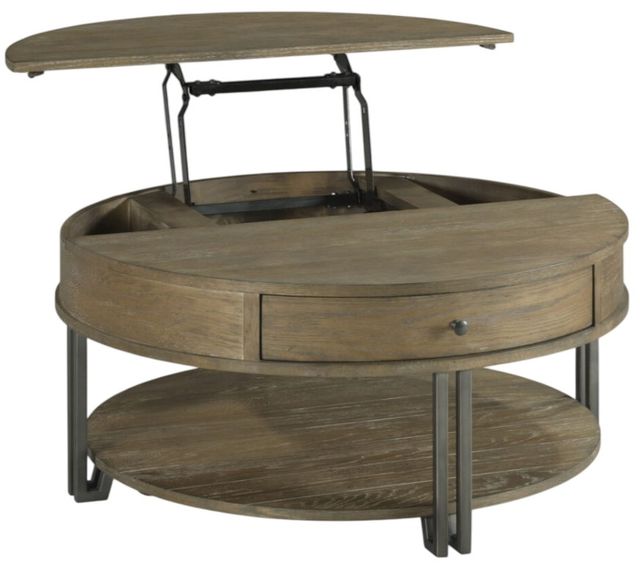
England Furniture Costa Way Taupe Lift Top Round Cocktail Table
This is the one table in the group that answers both problems at once. It is genuinely round, so it clears the corners out of a narrow walkway, and it lifts, so the surface comes up to laptop and dinner height for a living room that doubles as a workspace. The taupe finish is a warm neutral that sits comfortably between gray and brown, which makes it easy to place in an older home with existing wood trim. For a family with young children in a closed living room, this combination of safety, storage, and function is hard to beat.
Top Features
- True round top: No corners at shin or toddler height, and better diagonal clearance in a tight room.
- Lift top mechanism: Raises the surface for working, eating, or games without adding a second piece of furniture.
- Warm taupe finish: A neutral between gray and brown that suits both older woodwork and current palettes.
- Storage underneath: Keeps remotes, chargers, and clutter out of sight in a room with no other storage.
England Furniture Saddletree Brown Round Cocktail Table
Traditional and transitional rooms are the natural home for this one. The Saddletree table keeps the round silhouette that makes conversation groups and sectional corners work, in a brown finish deep enough to hold its own against dark trim, hardwood floors, and the warm wood tones common in older central Iowa houses. Without a lift mechanism, it is the simpler, cleaner-looking of the two round options, which suits a formal living room more than a family workspace. A good match for facing sofas or a sofa flanked by two chairs.
Top Features
- Round silhouette: Equal reach from every seat and no corner to catch a hip in a doorway path.
- Warm brown finish: Coordinates with hardwood floors and the darker wood trim in older homes.
- Clean, simple form: No mechanism to maintain, which keeps the look uncluttered in a formal room.
- Conversation-group friendly: Works especially well with facing seating or a sofa and two chairs.
Signature Design by Ashley® Bolanburg Two-tone Lift Top Coffee Table
Farmhouse rooms that need a working surface should look here first. Bolanburg is one of Ashley’s most recognizable two-tone treatments, pairing a lighter top with a darker base for the contrast that defines the modern farmhouse look, and the lift top turns it into a desk, a dinner table, or a game surface in seconds. That flexibility matters most in a house where the living room is the only shared space. Choose it if you liked the storage argument from earlier but your room is long enough that surface area beats corner clearance.
Top Features
- Two-tone farmhouse styling: Light top over a darker base, the contrast that defines the look.
- Lift top function: Converts the coffee table into a work or dining surface without extra furniture.
- Hidden storage: Space beneath the top for remotes, laptops, and everyday clutter.
- Generous rectangular surface: More usable top than a circle of comparable footprint.
Signature Design by Ashley® Carynhurst Whitewash Gray Lift Top Coffee Table
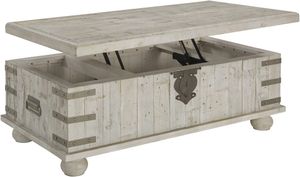
Rooms that feel dark are the case for a whitewash finish. Older homes with deep wood trim, small windows, and north-facing living rooms benefit from a light table more than almost any other single change, and the Carynhurst whitewash gray brings that lift without going stark white. The rustic texture under the finish keeps it from reading as modern, so it settles into a farmhouse or rustic room easily. Add the lift top mechanism and this becomes the practical centerpiece for a family room that works as hard as it relaxes.
Top Features
- Whitewash gray finish: Brightens dark rooms with heavy trim or limited natural light.
- Rustic texture: Keeps a light finish from reading as sterile or overly modern.
- Lift top design: Brings the surface to comfortable working and eating height.
- Storage compartment: Contains the clutter that accumulates in a room with no closet nearby.
Signature Design by Ashley® Dressonni Brown Rectangular Cocktail Table
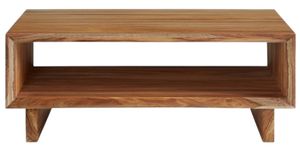
Households that host are the reason rectangles still dominate the category. The Dressonni cocktail table gives you the largest usable serving surface of any shape at a comparable footprint, which is exactly the trade the pros and cons section named: you give up corner clearance and gain a top that holds a spread. In a wide living room with a long sofa and clear walkways, that trade favors the rectangle. The brown finish is the most flexible tone in this lineup and sits easily with existing wood floors and trim.
Top Features
- Maximum usable surface: More room for serving, games, and spread-out projects than a round top.
- Long sofa pairing: Proportions correctly with a 90-inch or longer sofa where a circle falls short.
- Flexible brown finish: Coordinates with the wood tones already present in most central Iowa homes.
- Straightforward construction: No mechanism to service, which keeps long-term maintenance simple.
Signature Design by Ashley® Freedan Grayish Brown Coffee Table
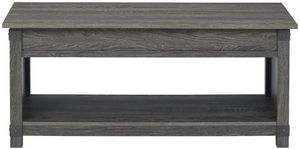
Undecided palettes have a friend in greige. The Freedan table lands in a grayish brown that reads warm next to beige and cool next to charcoal, which makes it the safest pick in this group for anyone who plans to change a rug or a sofa before they change the table. That flexibility is worth real money on a piece meant to stay for a decade. It is a clean, understated design without a mechanism, which suits a room where the seating or the art should be doing the talking.
Top Features
- Grayish brown finish: Bridges warm and cool palettes, so it survives a change of rug or sofa.
- Understated design: Recedes visually and lets seating, rugs, or art lead the room.
- No moving parts: Nothing to service or adjust over years of daily use.
- Broad style compatibility: At home in transitional, modern, and lightly rustic rooms alike.
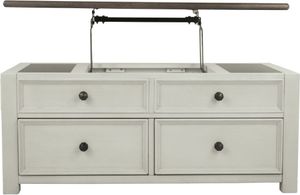
Signature Design by Ashley® Havalance Gray Wood Lift-Top Cocktail Table with White Base
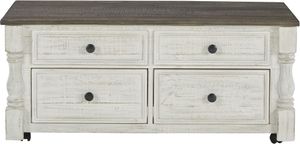
Cottage and coastal rooms get their answer at the end of the list. The Havalance pairs a gray wood top with a white base, a two-tone combination that keeps the piece feeling light in a small room while the wood top grounds it enough to look substantial. The white base is the detail worth noting, since a light base reduces visual weight far more than a light top does, which is the principle covered in the style section. With a lift top on board, it handles laptops and weeknight dinners as easily as it holds a tray of candles.
Top Features
- Gray wood over a white base: A light base reduces visual weight and keeps a small room open.
- Lift-top mechanism: Raises the surface for laptop work, meals, and games.
- Cottage and coastal styling: Suits lighter rooms with painted trim and airy palettes.
- Concealed storage: A place for the everyday items that otherwise live on the table top.
Frequently Asked Questions About Round Coffee Tables
A round coffee table should measure roughly one half to two thirds of your sofa length, which puts a standard 84-inch sofa in the 36 to 44 inch diameter range. With a sectional, two smaller round tables or a nesting pair usually works better than one oversized circle, because the pair can serve both runs of the L and shift out of the way for traffic.
A round coffee table should sit level with the sofa seat cushion or up to two inches below it, which keeps drinks within easy reach without the table crowding the sitting position. Measure the deepest seat cushion rather than the sofa frame, and aim slightly lower if the table will sit on a high-pile rug.
Leave 14 to 18 inches between the sofa front and the edge of a round coffee table, which is close enough to set down a glass without standing up. On a reclining sofa, measure that gap with the footrest fully extended, since the extension consumes six to twelve inches of clearance you would otherwise have.
Yes, a round coffee table is generally better in a small living room, because removing the corners widens the diagonal walkway and eliminates the edge that catches shins and hips. The trade is usable surface area, so a rectangle remains the better choice if the room is small but the household regularly serves food or spreads out projects on the table.
Stone-look ceramic and engineered wood with a durable topcoat hold up best with kids and pets, since both resist scratches, stains, and spills with routine cleaning. Natural marble is the least forgiving because it etches from citrus and wine even when sealed, and tempered glass is perfectly safe but shows fingerprints and nose prints constantly.
Anchor the arrangement with an off-center round or oval tray, add stacked books, one tall organic element such as greenery, and one sculptural object, then stop. Keep about half the surface clear and everything below eye level from a seated position, so the table still holds a mug and a remote on an ordinary evening.
Center Your Living Room Around the Right Round Coffee Table
Sizing and clearance decide whether the room works, material decides how the table lives with your household, and the base design drives both the style and the usable space around it. Get those three right and the table becomes the piece that quietly makes the whole living room function better.
Come see the difference in person. Shop round coffee tables and the full occasional table selection online at Store for Homes Furniture, or visit our Newton showroom to compare finishes under real light, run the edge-press stability test yourself, and see how a pedestal base changes a room compared to four legs. Our team knows these lines, we measure your doorways and stairwells before delivery day, professional delivery and setup is handled by our own crew, and local service is a phone call away years later. That is a different experience from guessing at scale and finish from a photo and meeting a box at the curb.